


As SEMICON Southeast Asia returns, the semiconductor industry finds itself at a critical crossroads.
While the AI boom continues to fuel massive growth, it has simultaneously triggered shortages in essential components like chips and memory.
These supply chain pressures, compounded by ongoing global trade tensions and tariff disputes, have accelerated a significant restructuring of the global electronics landscape.
In Southeast Asia, Taiwanese firms are navigating an increasingly competitive environment alongside Japanese, Korean, and Chinese rivals.
To address these challenges, the Taiwan Electronic Equipment Industry Association (TEEIA) has long been dedicated to supporting local clients and members by strengthening domestic demand and optimizing supply chain layouts to bolster international competitiveness.
Michael Wang, Secretary General of TEEIA, credits the association’s success to the unwavering support of key clients within Taiwan’s premier semiconductor ecosystem.
Since the post-pandemic era began in 2020, major industry players have significantly increased capital expenditures and prioritized the procurement of localized equipment.
This strategic shift enabled TEEIA to guide its members—primarily Taiwanese semiconductor equipment and component suppliers—into high-stakes international markets across Japan, the United States, and Europe, effectively amplifying the global influence of the entire supply chain.
Domestically, TEEIA fosters deep collaborations with prestigious research institutions, such as the Industrial Technology Research Institute’s (ITRI) Mechanical and Systems Research Laboratories and the Electronic and Optoelectronic System Research Laboratories.
These partnerships help mitigate R&D risks and costs for member companies.
Furthermore, the association actively promotes Beta site verification programs in alignment with government policies, which strengthens supply chain resilience and assists traditional Taiwanese manufacturers in upgrading their operations to enter the specialized semiconductor sector.
Within TEEIA, sixteen committees have been established, with over half focused on cutting-edge fields like panel-level packaging, wafer-level packaging, and silicon photonics.
By fostering a culture of cooperation over competition, Taiwanese firms are able to leverage their unique specialized strengths to meet diverse client needs through joint R&D efforts.
Strengthening Global Competitiveness Through Strategic Alliances: In the current landscape, electronic equipment manufacturers must engage directly with the end-users of AI infrastructure, necessitating a globalized approach to service.
For years, TEEIA has utilized a "strategic alliance" model to lead its members onto the world stage.
Initiated by the association’s board of directors, this collaborative approach has proven that technical prowess alone is insufficient; a truly effective semiconductor service model requires seamless industry-wide coordination.
This collective mindset ensures that Taiwanese brands can provide the comprehensive support required by global leaders in the AI and semiconductor spaces.
Providing Flexible Solutions for Legacy Plant Modernization: The sudden and intense demand for AI-related components has left many manufacturers struggling to keep pace.
Given the stringent cleanroom requirements of semiconductor production and the lengthy timelines associated with environmental assessments for water, power, and funding, building new facilities is often not a viable immediate fix.
To bridge this gap, TEEIA offers flexible and mature solutions that allow clients to acquire and modernize existing "brownfield" factories.
These comprehensive solutions span from facility management to equipment integration, enabling customers to expand their production capacity and achieve rapid deployment.
As cybersecurity becomes a paramount concern, compliance with standards such as SEMI E187 and E188 is evolving into a fundamental requirement for equipment manufacturers.
TEEIA is working closely with SEMI, ITRI, the Institute for Information Industry (III), and the Precision Machinery Research & Development Center (PMC) to promote these certifications.
This initiative is further bolstered by lead customers in the semiconductor industry who are championing these standards to ensure collective growth and security.
Currently, Southeast Asia hosts two primary semiconductor hubs: Singapore, which focuses on front-end manufacturing, and Malaysia, which serves as a center for traditional back-end testing and packaging.
However, as the industry pivots toward advanced packaging, the local supply chain remains heavily reliant on Taiwanese TEEIA members.
These firms are instrumental in helping major local players, such as Intel, STMicroelectronics, and ASE, transition and upgrade their facilities.
Consequently, TEEIA has identified this region as a top priority for promotion.
At this year’s SEMICON Southeast Asia, over 50 firms—mostly TEEIA members—are showcasing their capabilities.
With the support of the International Trade Administration and in partnership with PMC, a "Taiwan Pavilion" has been curated to feature 15 exhibitors highlighting breakthroughs in advanced packaging, smart manufacturing, digital transformation, and AI applications.
To further deepen ties with Southeast Asian partners, TEEIA has organized 15 product launch sessions covering equipment, modules, components, and system integration.
These efforts aim to position Taiwan’s integrated solutions at the heart of the region's shift toward advanced manufacturing, ultimately elevating the global prestige of Taiwanese brands.
In response to global supply chain restructuring, Campower International Precision Machinery—a specialist in roller gear cam rotary tables—has shifted its focus toward high-end overseas markets.
By expanding into Singapore, Turkey, Japan, and South Korea, Campower is leveraging its competitive edge in lead times, pricing, and R&D to win over international manufacturers.
High-Value Five-Axis Applications with Zero Backlash: As demand surges in aerospace, semiconductors, and EVs, precision is critical.
Machining tough materials like titanium and magnesium alloys leaves no room for error; any backlash-induced inaccuracy leads to costly scrap.
Campower is Taiwan’s first brand to develop a multi-lead, zero-backlash rolling contact drive.
Featuring the Roller Cam Driver, the product range spans from 100mm medical-grade tables to 800mm tables for EV wheel rims.
Compared to traditional worm gears, these solutions offer superior rigidity, speed, and wear resistance.
After 1.5 years of rigorous testing by major South Korean firms, Campower’s accuracy now rivals top-tier Japanese competitors, ensuring consistent quality for high-volume, five-axis production.
AI and Decarbonization: Boosting Global Competitiveness: Campower is also prioritizing sustainability—a key requirement for the European market.
Their products have earned the TMBA "Energy Saving Label" through significant internal upgrades.
By introducing energy-saving solenoid valves and pressure booster technology, the company slashed power consumption from 1W to 0.1W and reduced required air pressure from 5–6kg to just 3–4kg.
Additionally, the miniaturized cylinder design reduced physical volume by 55%, optimizing both energy use and equipment layout efficiency.
By integrating the SMC Compressed Air Management System, Campower enables real-time monitoring of carbon emissions and power usage, supporting the transition to smart, green manufacturing.
Looking forward, Campower is embracing AI to support its global expansion.
An AI Assistant on their website will soon provide 24/7 troubleshooting, ensuring seamless, around-the-clock service for international clients across all time zones.
"Following our focus on energy saving, this year is about 'Intelligence,'" says Vice GM Chen Ze-Ming.
Through collaboration with ITRI, Campower is integrating IoT sensing and AI feedback into its products.
Furthermore, the company is pursuing an "Industry Alliance" strategy, combining its tilting axis expertise with partners' Direct Drive (DD) motor technology to deliver flexible, high-speed customized solutions.
In response to the recent economic fluctuations affecting the Taiwanese machinery industry, SunUs has moved beyond supporting domestic clients to aggressively developing international markets.
The company has actively participated in exhibitions in the U.S. and India, is currently exhibiting at SIMTOS in South Korea, and has dispatched teams to Germany and Japan to engage with agents and reduce reliance on any single market.
When facing competition from major German and Japanese planetary gearbox brands—who often leverage economies of scale and currency exchange rates—SunUs focuses on its core strength: customization.
By utilizing its robust R&D and manufacturing energy, SunUs assists clients in solving complex or specialized application challenges that standard-product-oriented brands often struggle to address.
A prime example is the SunUs globally patented "Mechanical Zero-Backlash" planetary gearbox.
This product attracts clients with high-precision requirements by offering a relatively simple way to achieve zero-backlash goals.
Over the past two years, despite market volatility, SunUs has successfully exported to Europe, the U.S., and India, proving that precision and reliability are more decisive factors than price alone.
This success is underpinned by the company’s high-end in-house capabilities in hobbing, shaping, and gear grinding.
Looking forward, SunUs will implement German and Japanese turnkey gear-processing systems in its upcoming new plant to further enhance efficiency and integrate quality inspection workflows.
Mechatronic Integration: Supporting Turnkey Solutions: As machine tool and automation manufacturers shift toward "Turnkey Solutions"—where production lines must be ready for immediate operation—SunUs is evolving from a component supplier into a strategic provider of high-stability transmission systems.
Beyond individual products like gearboxes, racks, and slewing bearings, SunUs is actively seeking partnerships with motor, drive, and control manufacturers to offer comprehensive one-stop mechatronic solutions.
This integrated approach eliminates compatibility issues and significantly boosts development efficiency for clients.
From an ESG perspective, the gearbox is a critical energy-saving component.
SunUs planetary gearboxes boast a transmission efficiency of 97% to 98%, allowing smaller motors to drive larger output torques with minimal heat waste.
Furthermore, the zero-backlash design is a powerful tool for sustainability; by eliminating backlash, it reduces unnecessary vibrations and positioning adjustments, allowing machine tools to reach target positions accurately in a single move and preventing the energy waste caused by repetitive calibrations.
Focusing on Advanced Applications and Customized Processing: High-precision gearboxes effectively reduce processing time and defect rates—a crucial factor in sustainability, as scrapped parts represent a massive waste of materials, energy, and transportation resources.
SunUs has already entered the customized supply chains for emerging fields such as drone motors and humanoid robot joints.
The company is currently collaborating with clients to develop planetary gear transmission systems specifically for robotic dog joints.
Planetary gearboxes offer significant advantages in shock resistance and high-load capacity.
SunUs is currently focusing on medium-to-large robot joint modules required for high-load scenarios.
As the robotics industry moves from military and industrial use into the consumer household market, SunUs is continuously strengthening its production capacity and reliability.
Although this is their first time exhibiting at SIMTOS, SunUs has learned through local distributors that South Korean clients prioritize solution integrity and quality over low prices.
The featured Mechanical Zero-Backlash Planetary Gearbox provides a unique competitive edge; by requiring only a single motor to eliminate backlash—rather than the traditional two-motor/two-gearbox setup—it simplifies system design and reduces costs.
Additionally, to meet the global ESG trend of replacing hydraulic systems, SunUs is showcasing its Planetary Roller Screw Electric Actuators.
These actuators offer stepless stopping, controllable speed, and high repeatability without the risk of oil pollution, making them ideal for the electronics industry.
With a thrust and pull capacity exceeding 20 tons, they are also perfectly suited for the demands of the South Korean heavy industry market.
Amidst the challenges of tariff barriers and geopolitical shifts over the past year, the Taiwan machine tool industry is seeing a gradual recovery in inquiries.
However, this rebound comes with the test of significantly shortened lead times.
Tim Chang, General Manager of Kaoming Machinery, emphasizes that in a market where global consumption remains steady but competition is fierce, Taiwanese manufacturers must strengthen their resilience—competing not just on price, but on technology and delivery speed.
Beyond implementing TPS (Lean Management) to enhance capacity, Chang—who also serves as Chairman of the Precision Machinery Development Association (CMD)—is advocating for an industry-wide acceleration toward high-value, intelligent, and green manufacturing.
His vision involves building Turnkey solutions and integrated after-sales capabilities to solve client problems more effectively.
Boosting Competitiveness through Supply Chain Collaboration: As machine tool and automation manufacturers shift toward "Turnkey Solutions"—where production lines must be ready for immediate operation—Chang believes the key to industry recovery lies in "Collaborative Prosperity."
He encourages companies to start with collaborative exhibitions, marketing, and shared after-sales services to reduce costs.
Industry associations can play a vital role by organizing joint overseas exhibitions or Taiwan Pavilions to share costs and increase visibility.
A major strategic move is the establishment of overseas joint maintenance hubs.
By pooling capital and manpower to service multiple brands, Taiwanese manufacturers can overcome the traditional B2B weakness of relying solely on local agents.
This shared maintenance model also allows for the collection of direct customer feedback, which is essential for optimizing equipment and offering optimized machining paths, fixtures, and tooling as part of a total Turnkey package.
Digital Integration at SIMTOS: At the SIMTOS exhibition in South Korea, Kaoming showcased its long-standing commitment to the market, where some of its large gantry machines have been in operation for 38 years.
While South Korea has strong machine tool capabilities, it often lacks large-scale five-axis gantry models, creating a strategic opening for Kaoming.
However, success in this market requires high-level communication and trust.
Chang points out that after-sales support is increasingly vital, especially given the strong national pride and efficiency-driven nature of South Korean clients.
Chang shared an example of dealing with tool chatter issues, where a client might defensively react: “I am using the best tools made in Korea; they work perfectly on other machines, so why do they perform poorly on your Taiwanese machine?”
To overcome such hurdles, Kaoming works patiently through local agents to build trust.
By focusing on the right solutions and emphasizing the importance of high rigidity and stability, clients are usually persuaded.
If an agent is unfamiliar with a specific specialized process, Kaoming utilizes Digital Twin technology to simulate the differences between various tools and machining methods, providing data-driven proof that increases the acceptance of the total solution.
AI Empowerment and Decarbonization: Customized Turnkey Solutions: Regarding the AI trend, Chang observes that while industry giants have integrated AI into production scheduling, small-to-medium factories focus more on immediate practical benefits.
Clients want to see AI realize its true value through tool chatter monitoring, thermal compensation, and predictive maintenance to reduce unexpected downtime.
To compete with mass-produced general-purpose machines, Kaoming is focusing on high-level customization by enhancing structural stability specifically for difficult-to-cut aerospace materials.
The company utilizes Digital Twin technology to simulate machining paths, which significantly reduces trial-and-error costs and time.
Furthermore, to increase service stickiness, Kaoming has implemented a "One Machine, One BOM" system combined with AI-powered maintenance manuals, ensuring high-quality and efficient support that doesn't always require the presence of senior engineers on-site.
Sustainability is also a non-negotiable priority.
Kaoming is integrating energy-saving designs—such as "power-on-demand" hydraulic systems—at the initial design stage rather than as retrofits.
By aligning with the green energy labels promoted by TAMI and TMBA, Kaoming ensures its products remain competitive under increasingly strict international environmental regulations.
Faced with the recent volatility of the machine tool industry, Walrus Pump, a key component supplier, has adopted a dual strategy of "risk diversification" and "high-end transformation."
At the heart of this strategy is its new Global Plant in Kaohsiung, Taiwan, which utilizes advanced smart manufacturing to enhance production resilience.
By expanding its overseas procurement and flexible regional layouts, Walrus Pump has optimized its cost structure from the source, effectively neutralizing the impact of global trade barriers.
This "R&D in Taiwan, Flexible Global Integration" approach ensures the company maintains strong profitability in a changing market.
As Taiwanese machine tool and automation manufacturers form international alliances or undergo mergers, Walrus Pump is exporting its solutions alongside these partners to boost collective competitiveness.
The smart manufacturing capabilities of the Kaohsiung Global Plant are perfectly positioned to meet the stringent stability and volume requirements of large-scale industrial groups, allowing Walrus Pump to transition from a parts supplier to a strategic partner.
Digitalization and AI-Driven Decarbonization: In line with the machine tool industry's shift toward AI and green manufacturing, Walrus Pump has integrated data-driven optimization into its operations.
The company has implemented a Manufacturing Execution System (MES) to analyze data and deconstruct processes, effectively coordinating capacity and eliminating waste.
Regarding carbon reduction, Walrus Pump promotes high-efficiency permanent magnet inverter motors—available in IE3, IE4, and the latest IE5 grades—to help industrial users save power.
Furthermore, its proprietary drain back tank design ensures that coolants and cutting fluids do not leak, achieving sustainability goals through resource circulation and environmental protection.
These technologies are now being applied to high-end sectors including:
Aerospace: High-temperature alloy processing and high-reliability processes.
Semiconductors: High-cleanliness and high-precision fluid control.
AI Servers: Key components for liquid cooling systems and fluid efficiency optimization.
Smart Manufacturing/Robotics: Precision machining for long-lifespan components.
High-Efficiency Machining Solutions at SIMTOS: At the 2026 SIMTOS exhibition in April, Walrus Pump showcases its range of high, medium, and low-pressure immersion pumps.
These products meet the high precision, efficiency, and stability requirements for machining automotive and aerospace components, providing essential cooling, lubrication, and chip flushing.
Walrus Pump will also present comprehensive energy-saving solutions featuring high-efficiency motors and inverters.
Highlights include the TPH_P and TPHK_P series—new centrifugal pumps made from high-performance composite.
These offer a lightweight, rust-proof alternative to traditional cast iron or stainless steel while significantly reducing carbon emissions during the manufacturing process.
Transformation into AI Server Cooling: Walrus Pump has successfully expanded from domestic water pumps into high-tech applications such as AI server liquid cooling and EV charging station thermal management.
With the surge in global data center demand, Walrus Pump has secured orders from tier-one international data centers, demonstrating its global competitiveness in high-tech fluid efficiency and system stability.
Beyond core pump products, Walrus Pump now provides complete liquid cooling peripheral solutions, covering fluid transport, pressure control, and system integration.
With the ability to customize solutions for diverse industrial requirements, the company is poised for significant growth.
By 2026, driven by export growth, the efficiency of the new Kaohsiung Global Plant, and its successful entry into the supply chains of major German and Japanese machine tool manufacturers, Walrus Pump expects its performance to exceed previous years as it continues to lead in critical fluid system integration.
Leading brands power Southeast Asia’s manufacturing transformation at METALEX 2025.
Article / WWS Taiwan Editor Team
[Bangkok, Thailand] – As the Thai government vigorously implements the "Thailand 4.0" initiative and the Eastern Economic Corridor (EEC) plan, the manufacturing sector is rapidly moving towards automation and intelligence.
This year, the 39th METALEX is set to be a focal point, gathering global top-tier brands to showcase the latest advancements in metalworking and smart manufacturing.
Taiwan, as a globally significant machine tool exporter, is highly attractive in the ASEAN market, thanks to its capabilities in high-precision and high-flexibility manufacturing.
This year, leading Taiwanese manufacturers, including PALMARY, SUN FIRM, QUASER, and CHI ZONG, will exhibit their cutting-edge innovations, injecting new highlights into the event.
PALMARY: Extreme Grinding, Boundless Precision: Renowned for its profound expertise in grinding technology, PALMARY will highlight its flagship OIG-200R High-Precision Internal Grinding Machine.
Equipped with a CNC control system and automatic compensation function, the OIG-200R can be integrated with automatic measuring systems such as the Marposs for smarter and more stable grinding processes.
To meet the demands of production line automation, the OIG-200R is optionally available with an automatic loading/unloading module, facilitating unmanned, continuous production during nighttime shifts.
Another key product is the X-2540A Series CNC Angle-Head Cylindrical Grinder.
Focusing on high stability and high efficiency, it features a cross-type slide table and an enhanced guideway design, which not only boosts precision and rigidity but also effectively reduces the machine’s footprint, making it ideal for production environments with limited space.
The entire machine is equipped with a user-friendly intelligent operating interface and a fully enclosed protective design, prioritizing safety, aesthetics, and operational convenience.
SUN FIRM: Leading Heavy-Duty Smart Manufacturing with a Full Product Line: With over 65 years of professional experience, SUN FIRM has been one of the famous lathe brands in the industry.
SUN FIRM delivers the most comprehensive product line of CNC lathes in Taiwan, ranging from precision to super-large heavy-duty cutting CNC lathes.
It is one of the few global manufacturers with complete lathe integration capabilities.
SUN FIRM's core strategy is to satisfy the extreme processing requirements, which are often being requested by industries in Energy, Mining, Aerospace, Shipbuilding, and Heavy industry sectors, establishing market leadership through its impressive processing range.
For Horizontal CNC Lathes, the swing over bed ranges from 500 to 4,000 mm, with distance between centers up to 20,000 mm, and a maximum load capacity of 40 metric tons.
The Slant Bed CNC Lathes, designed for heavy cutting, offer a swing over bed up to 1,160 mm, while the maximum turning diameter on the worktable for Vertical CNC Lathes extends from 1,250 mm to 4,000 mm.
From product selections covering "1-meter to 20-meter machining capacity" to providing high-torque spindles and high-rigidity bed designs, SUN FIRM demonstrates profound strength in heavy-duty cutting and high-precision machining.
With superior technology, shortest delivery time, and bespoke design-and-manufacturing capabilities, SUN FIRM continues to elevate Taiwanese precision CNC lathes onto the global stage, making it an optimal choice for international clients seeking a competitive edge.
QUASER: Precision 5-Axis, Green Manufacturing Through Smart Tech: QUASER continues to specialize in the high-end 5-axis machining field, spotlighting the MF700 5-Axis Simultaneous Machining Center.
This center is characterized by high precision and high stability, making it suitable for aerospace, automotive, and complex component manufacturing.
The company maintains consistent precision through fully air-conditioned production facilities and adheres to a rigorous quality management and R&D system, with stringent checks from design modeling and Finite Element Analysis (FEA) to actual machine testing, embodying a "Precision and Stability" manufacturing spirit.
CHI ZONG: Ushering in a New Era of Cordless Lifting: CHI ZONG introduces innovative battery technology for portable hoisting solutions, including the DCH-250/500 Battery Chain Hoists and the DCW Series Battery Winches, realizing the concept of "Cordless Lifting."
These devices combine lithium battery power with a lightweight design, allowing for operation in any environment, eliminating power restrictions, and enhancing mobility.
All products are designed according to EU CE standards, passing 125% load testing and rigorous inspection to ensure maximum safety and stable performance.
As the wave of smart manufacturing advances, the Taiwanese machinery industry is collaborating with the ASEAN market to create a new manufacturing landscape through innovative technology, precision craftsmanship, and flexible manufacturing energy.
We cordially invite you to visit the Taiwan Pavilion to learn more! Taiwan Pavilion Booth Number: BM09 @HALL 102 BITEC.
For Taiwan’s woodworking machinery industry—highly reliant on exports to Europe and North America—the implementation of 'reciprocal tariffs' has not only raised import/export costs but may also dampen demand and investment due to inflationary pressures.
The biggest challenge, however, lies in tariff discrepancies among competing countries. To tackle this, the government and trade associations must jointly promote both internal transformation toward smart machinery and external market expansion.
According to Mr. Chang Yin-Kung, Chairman of the Taiwan Woodworking Machinery Association (TWMA), Taiwanese manufacturers must proactively embrace transformation and upgrade strategies in response to fierce international competition.
Companies should focus on enhancing product value, leveraging digital tools to improve management efficiency, and strategically investing within controllable risks. Doing so will build competitive barriers and turn crises into opportunities.
Mr. Chang advises member companies to consider transformation across all management aspects—from production and sales to finance and HR. By broadening their business horizons, exploring niche markets, and building technological barriers, companies can prepare for future market shifts.
In terms of product development, Taiwan’s woodworking machinery industry has aligned with global trends toward smart and sustainable production in recent years. International buyers have responded positively.
Expanding from their core product areas into related applications helps reduce risk while advancing toward high-value-added products with industrial entry barriers. Ultimately, product upgrading will better meet diverse global market needs.
As the fourth-largest woodworking machinery exporter in the world, Taiwan’s export value reached approximately USD 521 million. Over 80% of manufacturers are clustered in central Taiwan—especially in Fengyuan and Shengang—where more than 300 SMEs form a dense satellite ecosystem with efficient supply chain support.
This enables made-to-order production, Taiwan’s strategic advantage in adapting to global demand shifts. Supported by smart line integration strategies, the sector has actively penetrated international markets.
Prior to the pandemic, the Precision Machinery Research & Development Center (PMC) and TAITRA launched a 'Smart Machinery Overseas Promotion Program' to help Taiwan’s woodworking machinery industry shift from selling single machines to offering complete automated production lines.
By streamlining workflows for cabinetry, veneer, and honeycomb panel production, companies can significantly boost output while easing the labor shortage in traditional manufacturing.
As most Taiwanese woodworking machinery firms are SMEs or micro-enterprises, Mr. Chang recommends utilizing ERP systems and advanced management software to enhance operational structure.
He also encourages overseas exhibition visits to understand customer needs and local market trends—helping companies identify new breakthroughs and innovation opportunities.
For younger business successors unsure how to manage operations, Mr. Chang suggests participating in overseas trade missions led by TWMA. Such initiatives not only offer government-funded subsidies for better booth locations and visibility but also facilitate mentorship from industry veterans.
Face-to-face exchanges with local trade associations and building materials or furniture suppliers can generate valuable insights and new opportunities.
Looking ahead, TWMA will proactively utilize government resources and collaborate with organizations like PMC, the Metal Industries Research & Development Centre, and the China Productivity Center.
These efforts will include training programs to help member companies upskill their workforce and enhance long-term competitiveness.
Founded in 2015, SK Global Co., Ltd. is committed to advancing the timber processing industry by offering end-to-end turnkey solutions—from cutting, finger jointing, planing, pressing, sanding to packaging. As one of Taiwan’s few manufacturers specializing in timber structure processing and complete factory automation equipment, SK Global demonstrates strong systems integration capabilities and global market competitiveness.
Adapting to Industry Shifts with a Customized Foundation
Taiwan's woodworking industry has evolved from traditional solid wood furniture to the application of composite materials. The shift from standalone machinery to integrated production lines reflects this trend. Mr., General Manager of SK Global, believes that "listening to customer needs" is a key driver of business success. Whether it is a factory automation upgrade or a tailor-made plant layout, SK Global transforms client needs into production capacity with high flexibility and technical expertise, helping customers grow steadily in an ever-changing market.
Serendipity Sparks Collaboration, Expertise Builds Trust
During one edition of the LIGNA trade fair in Germany, had a chance encounter on a misboarded train with the largest wood processor in Australia. Sharing similar values, the two parties quickly connected. After over a year of back-and-forth communication, simulations, and tests, they successfully completed a comprehensive turnkey factory project. This collaboration highlighted Mr. professionalism and patience, as well as SK Global’s high execution efficiency in customized turnkey solutions.
This case propelled SK Global to further engage in developing equipment for CLT (Cross-Laminated Timber) and GLT (Glued Laminated Timber) engineered wood. Timber buildings offer numerous benefits—fire resistance, soundproofing, seismic resilience, ease of assembly, and shorter construction times. There are already buildings over 25 stories high constructed from timber worldwide. points out that with the integration of forestry resources and equipment upgrades, Taiwan has the potential to establish a complete timber construction supply chain and realize the vision of low-carbon architecture.
Expanding Applications to Drive a Sustainable Future
SK Global is also actively developing charcoal production lines by integrating, carbonization, and cooling to build high-efficiency charcoal production systems for its clients. Through innovative technology, the volume of carbonized wood is compressed, extending combustion time and enhancing both energy efficiency and economic value—thus maximizing resource reuse and profitability.
IGlobal Outlook, Relentless Progress
"Different countries have different regulations and production logic. SK Global’s value lies in its ability to provide tailored turnkey solutions that meet local requirements," says. As global demand for automation and sustainable construction continues to grow, SK Global remains committed to its core values of professionalism, customization, and integration. The company is actively expanding its international presence, enabling Taiwanese woodworking machinery manufacturers to reassert their longstanding expertise and capability in the evolving global timber construction supply chain.
SK Global sincerely invites industry professionals to visit its booth at LIGNA in Germany. Amid the global movement toward energy-saving and green construction, SK Global looks forward to working hand-in-hand with you to bring Taiwan’s woodworking machinery onto the international stage and co-create a sustainable future.
Taiwan plays a vital role in the global woodworking machinery market, backed by strong export performance and industrial expertise. Among its specialties, finger jointing machines stand out as high-tech, high-value-added products that symbolize Taiwan’s competitive edge.
YUNG NIEN FA MACHINE INDUSTRY CO., LTD. (YNF machine), a time-honored brand, has successfully evolved with the times—strategically diversifying its market presence across continents rather than focusing on a single region.
Today, the YNF brand is recognized in 50 to 60 countries worldwide, where the company continues to refine its products by listening closely to the needs of global customers.
Human-Centered Technology: Setting YNF Apart in a Competitive Market
In an industry where high-speed finger jointing machines have become common, YNF machine seeks to stand out by designing solutions that prioritize user-friendliness and smart automation.
Moving beyond traditional models, YNF has developed more intuitive, intelligent systems. Equipped with servo motors and high-speed flipping mechanisms, its machines dramatically enhance efficiency and output.
Operators can use a touchscreen interface to input dimensions directly, enabling one-touch automated knife adjustments—streamlining a process that once required experience and manual calibration.
This transition toward full automation significantly reduces labor requirements and setup time.
Modern features such as obstacle detection and checkpoint inspection now come standard. Beyond finger jointing, YNF integrates full production line capabilities—from feeding and gluing to cutting, stacking, and more.
These systems can be customized to connect with upstream (e.g., four-side molders or defect saws) and downstream (e.g., panel jointers) equipment, forming comprehensive continuous-processing solutions.
High-quality components ensure durability, while the company’s commitment to after-sales service makes it a trusted partner for European and American clients seeking to reduce labor costs and improve efficiency.
YNF machine provides tailor-made machines and complete production lines that maximize added value and align with sustainability goals—especially through the promotion of wood reuse and waste reduction.
As Taiwan’s woodworking sector faces an urgent digital transformation, YNF’s decades-long presence in Europe, the U.S., and Japan enables it to adapt flexibly to global market demands.
The company believes that customer service extends far beyond product delivery—continuous communication and support before, during, and after sales build long-term client trust.
By providing responsive after-sales support, YNF fulfills its responsibility and deepens client relationships.
Actively expanding into international markets, YNF continues to elevate its brand visibility and market share.
The company has ushered the high-speed finger jointing segment into a new era—and warmly welcomes visitors to explore its smart solutions at the upcoming LIGNA trade fair in Germany.
In response to the escalating impact of reciprocal tariffs initiated by the United States, Leadermac Machinery Co., Ltd.—Taiwan’s largest manufacturer of four-side planers—has accelerated efforts to diversify markets and develop intelligent, energy-efficient machinery.
With a dominant 50% market share in the U.S. and presence in 62 countries under the LEADERMAC brand, the company is a global leader in the woodworking machinery industry.
Founded in 1972, Leadermac began by producing small woodworking machines before specializing in four-side planers, multiple rip saws, knife grinders, and flooring scrapers.
Its portfolio now spans from entry-level cutting machines to high-end CNC systems with remote control, data collection, and predictive maintenance features-all aimed at enhancing quality and operational efficiency.
After returning from Canada, current General Manager Mr. Jack Chang brought international perspective and language fluency to help the company penetrate Western markets.
His vision shifted the focus from pure manufacturing to customer-centric service, establishing an in-house R&D department to develop products that meet European and American standards.
Leadermac is now recognized as the world’s second-largest planer manufacturer-second only to leading German firms.
Although recent challenges such as the Russia-Ukraine war and Europe’s energy transition have suppressed investment in capital equipment, Leadermac has continued to grow by targeting the furniture and construction sectors.
The company sees Eastern Europe, particularly Poland and Romania, as gateways to post-war reconstruction opportunities in Ukraine.
Smart Machinery Integration for a Connected Manufacturing Ecosystem
To compete with European leaders known for innovation and quality, Taiwanese companies must prioritize smart, sustainable technology development.
Leadermac has invested heavily in R&D and digital transformation since 2016, incorporating Industry 4.0 and ESG principles.
Its latest Thundermac and Super-Thundermac series feature touch-based HMIs, intuitive UI with enlarged icons, and dialogue interfaces-ideal for aging operators.
All machines integrate European components from Schneider Electric and Siemens to ensure reliable automation and detailed digital production records.
Factory managers can remotely monitor multiple machines using industrial IoT dashboards, tracking tool conditions, productivity, and quality.
Energy-Efficiency with ESG in Mind
In response to Europe’s growing emphasis on ESG since 2018, Leadermac has added smart energy-saving systems to its planers.
With current meters installed on various circuits, operators can track real-time data on voltage, current, and power consumption via screen display.
IE3 high-efficiency motors, paired with PLCs and inverters, enable optimal power output and significantly reduce energy waste compared to conventional switches.
Laser sensors and servo motors enhance cutting precision and tool alignment, while touchscreen UIs allow for seamless automation without manual measurement-boosting productivity and usability.
Mobile devices such as tablets and smartphones can be used for remote monitoring and analyzing power trends, supporting sustainability goals.
At LIGNA, Leadermac will present its latest high-speed planers and automated knife grinders, all equipped with energy-saving components and third-party sustainability certifications.
The new Easyset-EU HMI interface allows intuitive operation and quick tool setup-essential for production changeovers.
High-end guide rail systems ensure stable, high-quality surface finishes even during rapid feed rates, combining accuracy and efficiency.
Leadermac’s automated knife grinder features PLC control, handheld UI, automated grinding head positioning, and rapid tool change mechanisms.
Integrated measurement systems allow for seamless tool management, making it the ideal solution for reconditioning cutting tools.
The company also offers full-factory automation services, integrating modules for feeding, sorting, stacking, and more-providing clients with holistic solutions for the smart woodworking factory of the future.
With over 60 years of experience, KUANG YUNG MACHINERY CO., LTD. (Kuang Yung) has built a reputation for depth, reliability, and steady growth.
Its industry expertise and robust manufacturing capabilities have made it a prominent force in the global woodworking machinery market, especially in the field of rip saws.
As a leading provider of high-performance automated rip saws, Kuang Yung excels in delivering precision, stability, and productivity.
Its smart system integration enables material detection and automated deviation correction using intelligent algorithms—optimizing line efficiency and minimizing waste.
These systems are highly adaptable to meet the unique needs of customers in over 40 countries, supported by comprehensive pre- and after-sales services.
Responding to demands in European and North American markets for smart factories and labor-saving automation, Kuang Yung has proactively implemented smart machinery strategies since 2011.
With increasing emphasis on data visualization, the company integrates sensors to map raw material contours and uses algorithms to calculate optimal cutting paths—especially valuable given the scarcity of premium wood.
Its smart solutions include automated infeed, alignment, and outfeed systems that maximize the use of every irregular-shaped wood piece—reducing waste and preserving material value.
The company also faces the challenge of educating traditional markets about the tangible benefits of smart technology, investing substantial effort into market awareness.
Kuang Yung consistently allocates 8–10% of its annual revenue toward R&D.
Its engineering team covers mechanical, electrical, software, and AI data analytics domains, and it regularly collaborates with academic institutions on smart manufacturing and machine learning initiatives.
The company holds multiple domestic and international patents, including sensor-controlled infeed modules and multi-axis adjustable saw blade structures.
To support green manufacturing, Kuang Yung uses recyclable components, eco-friendly materials, and energy-saving technologies.
For instance, permanent magnet motors consume 10% less energy than traditional motors—lowering both operational costs and carbon emissions.
In anticipation of net-zero carbon mandates, Kuang Yung has already trained and certified internal personnel—demonstrating its readiness to embrace the future without external reliance.
Kuang Yung warmly welcomes global partners to visit its booth at the LIGNA trade fair in Germany and join its journey toward a smarter, greener woodworking industry.
As global efforts to achieve net-zero emissions accelerate, forest resources have become increasingly precious—closely tied to international carbon credit systems.
This has placed constraints on the use of solid wood materials in the decoration, flooring, and furniture industries, raising the value of timber and driving demand for resource-efficient technologies.
INNOVATOR MACHINERY CO., LTD. (INNOVATOR) has embraced this shift by focusing on intelligent veneer processing solutions that align with environmental sustainability.
Founded in 2003, INNOVATOR developed veneer lamination technologies that enhance wood utilization by bonding ultra-thin veneer to engineered wood substrates.
Its systems can process veneer as thin as 0.2 mm—delivering cost savings while preserving the natural aesthetics of wood, meeting consumer demand for sustainable design.
Following the 2007 financial crisis, INNOVATOR entered into a technical partnership with Europe’s SAVI, a major veneer shear manufacturer, enabling it to offer full production lines.
Today, the company supplies a complete range of machines including shearing machines, glue applicators, spreaders, stitchers, edge trimmers, and automatic stackers—providing a one-stop solution for veneer processing.
Post-crisis, the rise of Industry 4.0 catalyzed a new wave of smart manufacturing. INNOVATOR responded by launching Asia’s first fully automated veneer production line in 2015.
This reduced manual handling losses, improved yield, and eased labor shortages—positioning INNOVATOR among the top three veneer equipment manufacturers worldwide.
Even amid the US-China trade war and the reshuffling of global supply chains, INNOVATOR leveraged its early experience navigating the relocation of furniture industries.
Its leadership team visited over 30 countries and participated in international exhibitions to promote the brand, backed by a strong service strategy and feedback-driven R&D.
As of 2019, INNOVATOR has established a global network of distributors and sold over 1,000 machines in more than 50 countries.
The company continues to expand its product offerings and aims to become the global leader in veneer equipment manufacturing.
To further enhance automation, INNOVATOR collaborated with the Precision Machinery Research & Development Center (PMC) to develop Asia’s first smart veneer line (W-Team 6).
This line integrated double-knife shears, crosswise stitchers, and edge trimmers—reducing required labor from 10 to 3 operators.
The final output is suitable for furniture and interior materials, and INNOVATOR was the only vendor to successfully commercialize its line during the project phase.
Currently, the company is integrating remote monitoring capabilities by installing sensors to track utilization rates and improve management efficiency.
With PMC’s support, INNOVATOR is also introducing AI+AOI systems to inspect and grade veneer surfaces—eliminating reliance on manual visual checks.
This boosts both inspection speed and grading accuracy, addressing key pain points for traditional manufacturers.
INNOVATOR looks forward to showcasing its cutting-edge veneer solutions at the upcoming LIGNA trade fair and invites industry professionals to explore opportunities for collaboration in sustainable wood processing.
In the wake of the US-China trade war launched during former President Trump’s first term, and the subsequent “friendshoring” policy promoted by the Biden administration, Asia has witnessed a sustained relocation of manufacturing bases and the rise of Southeast Asia’s semiconductor industry.
Fueled by innovations in generative AI and advanced packaging processes, the electronic equipment sector has surged to become the leading segment in Taiwan’s machinery export landscape.
However, this transformation has also brought structural risks. Taiwan’s export market is increasingly tilted toward the US, with 2024 seeing a record high in exports to the United States—turning Taiwan into America’s sixth-largest trade deficit partner.
If Trump were to return to office and enforce a “reciprocal tariff” policy, Taiwan would be among the first affected, alongside other countries such as Vietnam, Indonesia, Malaysia, Thailand, and Singapore.
Taiwanese firms, whether exporting directly or indirectly to the US, would face broad tariff impacts.
An analysis of the semiconductor supply chains in Southeast Asia reveals that only Malaysia and Singapore currently operate wafer fabrication plants.
Malaysia hosts seven fabs (mainly 8-inch, with some 6-inch), focusing on back-end processing; Singapore, with 16 fabs (mostly 12-inch and 8-inch), specializes in front-end processes.
Singapore accounts for 5% of global wafer production and 11% of the semiconductor industry, with 20% of global semiconductor equipment reportedly manufactured there.
Facing Tariff Shock: TEEIA Diversifies Market Strategy
The Taiwan Electronic Equipment Industry Association (TEEIA) has long anticipated this shift.
Since the post-COVID in 2023, TEEIA has actively explored Southeast Asian markets, assisting member companies in relocating production and strengthening supply chain resilience.
TEEIA has visited Malaysia’s Penang and Kuala Lumpur (focusing on back-end packaging and testing) as well as Singapore (front-end processing), while also attending local exhibitions and engaging with buyers.
According to Chairman Lin Shih-Ching, TEEIA’s long-term efforts to diversify market development have begun to yield results.
From earlier participation in SEMICON WEST (USA) and SEMICON China, to more recent outreach in Southeast Asia, and now looking to Germany and Japan as future growth markets, the association continues to pave the way for Taiwan’s semiconductor equipment sector.
Amid the AI-driven demand for advanced processes such as CoWoS, FOPLP, and silicon photonics, Taiwan’s strength in back-end packaging automation is generating new opportunities.
With global trade dynamics shifting, firms like ASE and SPIL are not only partnering with TSMC in the US but are also responding to American clients’ preferences to lower costs via local packaging solutions.
Malaysia, inheriting European expertise, is poised to upgrade its back-end technologies—with Taiwanese firms playing an important role in that evolution.
TEEIA suggests that the government should leverage Taiwan’s strengths in semiconductors and ICT to offset the vulnerabilities faced by traditional SMEs amid tariff shocks.
This shift may accelerate overseas expansion for Taiwan’s packaging and testing companies, creating equipment opportunities for TEEIA members such as YCM and Habor.
As long as machine precision and surface cleanliness meet industry standards, TEEIA can connect Taiwanese machine tool manufacturers to global demand.
SEMICON Southeast Asia Set to Launch – Taiwan Pavilion Highlights Innovation
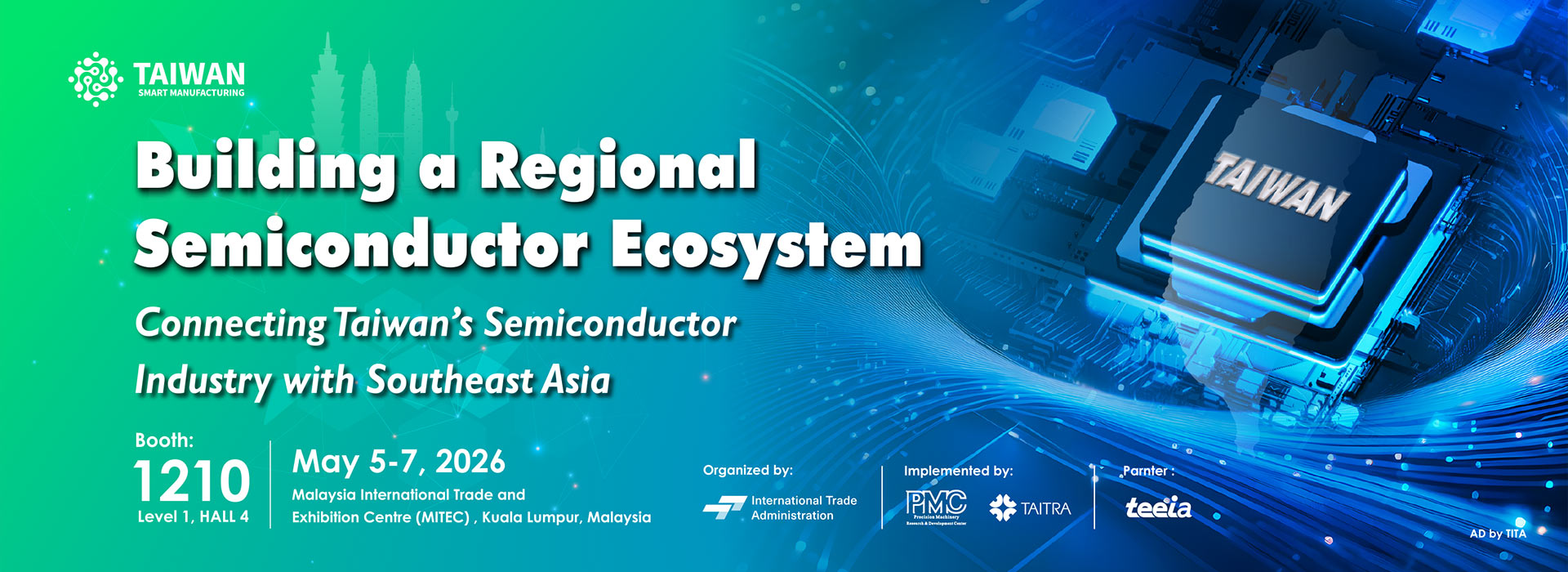
With the 30th SEMICON Southeast Asia exhibition to be held in Singapore this May, the event will feature suppliers of semiconductor equipment, materials, and services from around the world.
TEEIA’s participation aims to showcase Taiwan’s dynamic packaging, testing, and smart manufacturing capabilities to Southeast Asian markets, addressing tariff-related trade barriers in the process.
This year, Taiwan will expand its pavilion to include 52 companies, up from 47 in 2024. TEEIA will also collaborate with the Bureau of Foreign Trade and the Precision Machinery Research & Development Center (PMC) to organize a Taiwan Image Pavilion under the theme “Sharing, Collaboration, and Co-prosperity – Linking Taiwan’s Semiconductor Strengths with Global Opportunities.”
Seventeen TEEIA members will join the collective effort to foster greater ties with major players in Germany, Japan, and Southeast Asia.
The pavilion will host product launch events, one-on-one business matchmaking sessions, and media interviews to support trade promotion in the ASEAN market.
Ten global media outlets have been invited to cover up to 40 matchmaking sessions on the theme of ‘Linking Taiwan’s Semiconductor Strengths with Global Opportunities.’
A pre-show networking dinner will also be held, inviting local associations and industry partners to enhance engagement between Taiwanese companies and Southeast Asian supply chain stakeholders.
At least 40 local buyers and association representatives are expected to attend eight scheduled product launch events—enabling targeted business matching and accelerating overseas opportunities for Taiwanese firms.
TAIPEI, 6 de junio de 2024 /PRNewswire/ -- La industria de maquinaria de precisión de Taiwán presentará sus últimas innovaciones en EXPOMAQ 2024 el 18 de junio en el Poliforum León Exhibition Center.
Organizado por el Precision Machinery Research & Development Center (PMC) y con el apoyo de la International Trade Administration (TITA), este evento contará con empresas y asociaciones taiwanesas líderes, destacando el compromiso de Taiwán con la fabricación inteligente y la sostenibilidad.
Fabricación inteligente en Taiwán: Liderar el futuro: Los fabricantes taiwaneses están redefiniendo la industria con soluciones inteligentes y sostenibles, haciendo hincapié en los principios ASG y la reducción de carbono.
Presentación de la innovación taiwanesa: El PMC contará con cinco empresas taiwanesas líderes en EXPOMAQ 2024, cada una de las cuales ofrecerá tecnologías únicas y de vanguardia.
Ashun Fluid Power Co., Ltd.: Productos: Actuador rotativo hidráulico, amortiguador viscoso fluido.
Aspectos destacados: ASHUN se especializa en soluciones hidráulicas, incluidos cilindros personalizados de alta calidad. Sus actuadores giratorios convierten el movimiento del pistón en movimiento giratorio con alto torque y durabilidad. Los amortiguadores viscosos de ASHUN sobresalen en la disipación de energía y han ganado múltiples Premios a la Excelencia de Taiwán.
Jainnher Machine Co., Ltd.: Productos: Rectificadoras.
Aspectos destacados: Con más de 40 años de experiencia, Jainnher proporciona soluciones de rectificado de alta precisión para diversas industrias, incluidas las herramientas aeroespaciales, automotrices y médicas. Su servicio integral de ventanilla única y su I + D interna garantizan una calidad excepcional y una producción eficiente.
SANES Presses Co., Ltd.: Productos: Precision Warm and Hot Die Forging Presses de SHF.
Aspectos destacados: Las prensas de SANES cuentan con alta rigidez y baja deformación con un diseño único de compensación de expansión de calor tipo X diagonal, lo que garantiza una precisión y durabilidad superiores. Esto los hace esenciales para producir productos forjados consistentes y de alta calidad.
Taiwan Chelic Co., Ltd.: Productos: Pinzas.
Aspectos destacados: Especializadas en componentes de automatización neumáticos y eléctricos, las pinzas de la serie HDE de Taiwan Chelic son conocidas por su alta precisión, recubrimiento avanzado de materiales y robustos sistemas a prueba de polvo, ideales para tareas industriales exigentes.
Winner Hydraulics Corporation: Productos: Válvulas de cartucho hidráulico, Mini Power Packs.
Aspectos destacados: Winner Hydraulics Corporation es un fabricante reconocido internacionalmente de válvulas de cartucho hidráulico roscadas, colectores y mini power packs. Todas las válvulas de cartucho de la serie que Winner proporciona están chapadas en zinc-níquel.
Involucrando al mercado mexicano: La Taiwan Machine Tool & Accessory Builders' Association (TMBA) y la Taiwan Fluid Power Association (TFPA) mostrarán las fortalezas de Taiwán en la fabricación inteligente y la personalización. La cadena de suministro de Taiwán garantiza soluciones eficientes para los clientes.
Acompáñenos en EXPOMAQ 2024 (https://www.taiwanpavilion-twmt.tw/EXPOMAQ).
Damos la bienvenida a los representantes de los medios de comunicación y fabricantes a nuestra conferencia de prensa el 18 de junio a las 2 PM en el stand 1627. Los asistentes recibirán regalos exclusivos y explorarán los últimos avances de Taiwán en fabricación inteligente.
Taiwan Smart Manufacturing, in partnership with the Taiwan Machine Tool & Accessory Builders’ Association (TMBA), is excited to be joining EXPOMAQ 24 from June 18th to 20th in Guanajuato.
The opportunity to strengthen its foothold in Latin America, and to show how one small island has become the world's fifth-largest exporter of machine tools, is precious.
Through its leading brands, they will display how a commitment to innovation, speed, precision and evolving with the growth of IoT and AI makes Taiwan a major player in the machine tool industry.
Whatever industry you are involved in, be it aerospace, automotive, electronic parts or precision tools look no further than Taiwan Smart Manufacturing as a partner.
They have been operating their “Smart Machinery Overseas Promotion Program” since 2018 and embrace every opportunity to grow the machines tools industry by matching global clients with manufacturers and offering premium total solutions.
All their exhibitors have the high-quality products to capitalize on the opportunity to tap into the huge potential that exists in Mexico as a manufacturing hub with a short supply chain in the Americas.
Taiwanese companies have long been valued partners to key manufacturing countries, offering highly customized products, continuously developing automation, and low-carbon trend products, combined with fast and dedicated long-term cooperation services.
Many of the top Machine Tool producers from Taiwan will be participating in EXPOMAQ 24.
You will be able to find ground-breaking products from many companies, such as:
Golden Asia: a world-class manufacturer of hard chrome bars and cylinder tubes. They are a true pioneer of evolution in industrial hydraulics. A focus on offering both the best quality and service has helped them build a customer base of world-renowned companies. Golden Asia has also won awards both in Taiwan and abroad for being a top-quality, trusted supplier. Their wide range of hydraulic piston rods will form the centerpiece of their exhibit and whatever industry you are in – they will find the right solution for you.
Jainnher Machines: who will be showcasing their centerless grinding machine which is suitable for mass production components. With over 40 years of experience in the grinding field, Jainnher has an innate understanding of its customers’ needs. Their commitment to R&D means they have a wide variety of cutting-edge grinding machines for almost any purpose: centerless, cylindrical, internal, plunge and angular, center hole, double spindle and more.
Sanes: a professional press maker. Unlike other press companies, Sanes produces customized machines to meet their customers' needs. They developed the first Taiwan-made fine blanking presses. Here they will be showing off their newest forging machine. They never stop improving technical development while developing high-precision, high-rigidity presses that operate with low noise and low vibration.
With Taiwan Smart Manufacturing & the TMBA, take a glimpse into the future of the machine tools industry – a future that Taiwanese companies will be at the heart of.
So, please come and join and see where innovation meets inspiration. There will be lots to experience and learn and, on June 19th at 13:30, there will be a fun football activity in line with the upcoming CLUB AMÉRICA CUP, being held at the Taiwan Smart Manufacturing booth (SALONES C4 Booth 1624).
Adam Donnelly, Editor Worldwide Services Co., Ltd. (WWS)
Taiwan Fluid Power Association (TFPA) is proud to be bringing the very best companies in the industry to EXPOMAQ 24 from June 18th to 20th in Guanajuato.
With the fluid power industry expected to grow by 50% by 2030, Taiwan is keen to be at the forefront of this growth.
As such, the TFPA is grateful for the opportunity to build closer ties and win-win business relationships in Mexico, which serves as a key manufacturing hub for the Americas.
Taiwanese world-leading brands are mainly hydraulic and pneumatic manufacturers and will be displaying the full breadth of their product ranges.
With applications across a huge number of industries such as semi-conductors, aerospace, military, construction, agriculture, marine, textiles and more, there is a need for constant innovation.
To stay at the top and ahead of the trends, an emphasis on smart manufacturing and high performance is common to all the Taiwanese exhibitors.
There are many fluid control component manufacturers from Taiwan, continuously supplying the finest, most reliable and most innovative application equipment across the globe.
EXPOMAQ 24 offers an ideal platform for Taiwan’s companies to raise their profile in Latin America and establish valuable business contacts in this exciting, emerging economy now and into the future.
Three leading lights of our industry, in particular, will be showcasing their latest products:
ASHUN: a total solution for fluid power. They specialize in customizing high-quality hydraulic cylinders and were the first fluid power company in Taiwan to obtain the AS 9100 certification for Aerospace Quality Management. ASHUN is excited to present their Hydraulic Rotary Actuators, Fluid Viscous Dampers, Hydraulic Cylinders and Automatic Quick Couplers at EXPOMAQ 2024. They will demonstrate how we can assist customers in solving their challenges by providing custom made solutions to fit their needs. If you need a long-term, trustworthy supplier of technology and production capacity in the fluid power industry, look no further. ASHUN provides innovative solutions and reliable support to meet the evolving needs of their clients in addition to a reputation for durability, versatility and reliability.
CHELIC: a company with a long track record of almost 40 years’ excellence in their field. With a focus on the highest levels of precision and reliability, CHELIC will be showing off its latest electrical actuators, switch, vacuum systems, and HDE grippers. They proudly boast a product range with over 10,000 models and can be your one stop shop whatever needs you have. They serve a wide range of machinery sectors globally, including production, inspection, packing, forming and factory automation.
WINNER Hydraulics: an internationally recognized manufacturer of screw-in hydraulic cartridge valves, solenoid valves, manifolds and mini power packs. Renowned globally for its outstanding quality, performance and innovation, they also make 90% of all parts in-house. WINNER is bringing its newest EP solenoid valves, ES solenoid valves, counterbalance valves, and various types of manifolds as well as AC and DC mini power packs to the exhibition. Their focus on working closely with all their partners around the globe, in more than 60 countries, allows them to have state-of-the-art solutions readily available. In addition, they are delighted to be welcoming their long-term partner in Mexico, Servicio Hidraulico Industrial to their booth.
So, open your eyes to a world of possibility. In a world where things may be fluid, one thing you can count on is the strength and stability of Taiwan’s fluid power industry.
Visit and learn that no matter what your needs, you’ll find what you’re looking for and more.
And, if EXPOMAQ has whetted your appetite for something more, please be aware that later this year, the TPFA will be holding the Taiwan International Fluid Power Exhibition in Taipei from August 21st to 24th. The biennial exhibition has established itself as a significant event for the fluid power industry in the Asia-Pacific region.
In the ever-evolving landscape of manufacturing, precision and efficiency are paramount.
With this in mind, we are thrilled to introduce the KMC-325GM Intelligent Five-Axis Gantry Type Machining Center, designed to meet and exceed the demands of the industry.
Major Korean shipbuilder Hanwha Ocean has swung to profit in 2023 amid a surge in sales. Consolidated net profit stood at 160 billion won ($119.8 million) last year, a sharp turnaround from a loss of 1.74 trillion won a year earlier, the company said recently in a regulatory filing. Sales jumped 52.4 percent on-year to 7.4 trillion won, but its operating balance remained in the red.
With a plethora of features, setting KMC-325GM apart from similar models on the market. At the core of its excellence lies a truly revolutionary one single-piece “BOX-IN-BOX” structure with the RAM placed inside of the saddle, and the saddle placed inside of the crossbeam.
This rigid structure design not only minimizes the hanging problem but also maintains thermal symmetry during high-speed machining and ensures unparalleled stability, crucial for achieving the highest levels of precision in machining and an overall longer lifespan, benefitting both our customers.
Furthermore, our commitment to sustainable manufacturing is evident in the incorporation of energy-saving initiatives throughout the machine.
Different from other thermal control modes, is limited valid the temperature within 25 degrees and 80% of the spindle speed. KMC unique coolant system controls the temperature from the original point rather than suppressing it after the thermal growth happens.
Therefore, we not only apply a hollow ball screw, but a motor board with an oil circuit to isolate the temperature of the motor transfer the heat to the ball screw, bearing seat with an oil circuit to cut off the heat from the ball screw.
This unique design is not only a KMC patent but a critical factor for us to win the “Taiwan Excellence Award in 2023”. Three axes cooling system not only enhances machine accuracy but also meticulously regulates machine temperature, guaranteeing optimal performance while minimizing environmental impact.
The superiority of the KMC-325GM extends beyond its innovative design. Equipped with a two axis swiveling head with a spindle speed of 15,000 rpm which can also be optioned to 30,000 rpm.
Integrated table base with column design which made the columns easy to position. Of course without a leaking problem.
Z axis is driven by two motors and two balls screws which increase 22% of the machining time without hysteresis.
These ensure consistent quality and precision, crucial for aerospace manufacturing, automobile mold manufacturing, etc application.
In conclusion, the KMC-325GM Intelligent Five-Axis Gantry Type Machining Center represents a paradigm shift in manufacturing technology.
With its innovative design, energy-saving initiatives, and unmatched performance qualities, it sets a new standard for precision, efficiency, and sustainability in the industry.
KAO MING is a leading innovator in manufacturing technology, dedicated to providing cutting-edge solutions for a wide range of industries.
With a focus on innovation, quality, and sustainability, we continually strive to exceed the expectations of our customers and contribute positively to the world we live in.
Editor: Kim, Worldwide Services Co., Ltd.
The Core Brain of Smart Manufacturing - Controller
Since its introduction at the Hanover Industrial Fair in 2011, Industry 4.0 has gradually become the method for manufacturers to optimize production processes.
The goal of "smart manufacturing" is not only to automate production lines and reduce manpower but more importantly to achieve "virtual and real integration" through IIoT industrial Internet of Things, communication network, and cloud databases, establishing an automated management system for factories.
In addition to real-time monitoring of equipment status, process adjustments, and increased capacity, manufacturing plants can also design quality traceability systems to meet the needs of overseas buyers.
The precision can even be traced back to the production capacity of the factory at various time points, and the prerequisite for achieving these "smart manufacturing"? Installing the "controller" as the brain for machine tools.
While Taiwan's machine tool industry holds a significant share of global machinery sales, the vital "controller" technology has historically been dominated by foreign suppliers.
However, with the recent backing of the Industrial Technology Research Institute, domestic controller manufacturers have made strides, carving out new avenues in the face of formidable competition from companies like Fanuc, Mitsubishi, Heidenhain, and Siemens.
SYNTEC Breaks Through with Openness and Inclusiveness: Founded in 1995, SYNTEC has adopted "openness" as its strategy from the beginning, allowing distributors or end customers to do custom software design according to their own needs, and their flagship product PC-Based CNC controller has strong inclusiveness, able to connect with motors from other manufacturers’ servo motors, and even including the high-precision built-in spindle motors.
Today, as production lines move towards overall automation and connectivity, SYNTEC takes customer needs as the core strategy for development, providing a one-stop Total Solution.
SYNTEC's Product Manager, Hsu, pointed out, "Many Taiwanese manufacturers previously relied on Japanese controllers. While these controllers are dependable, their limited openness often results in similar products among machine manufacturers and leads to price competition." In response, SYNTEC developed a custom design software, the “Syntec IDE" to empower distributors and subsidiaries to tailor developments to customer requirements.
Moreover, SYNTEC's headquarters swiftly addresses market needs by crafting specialized solutions, like the "high-gloss glass controller" for 3C glass grinding catering to a downstream supplier for smartphone manufacture.
Putting Customer Needs at the Core: In recent years, the popularity of multitasking machines, such as machines combining turning and milling, turning and grinding, or turning and robotic arms, also greatly tests the technological development capabilities of controllers.
SYNTEC has complete solutions to meet the needs of machine tool’s multi-tasking requests.
In addition, SYNTEC launched the five-axis controller as early as in 2019, so they have built matured applications with using the related technologies such as multi-axis linkage, multi-axis & multi-task control, and multi-program applications, making them suitable for customers requiring high-precision complex surface machining.
Providing More Than a Controller: A Complete Solutions Designer: In addition to the development of controllers with various specifications, SYNTEC has also developed complete servo solutions in recent years, including drivers, motors, encoders, etc., so it can adjust product functions according to the needs of end customers to achieve a one-stop Total Solution.
A Little Less Energy Consumption, A Little More Production - The Sustainable Line Partner for Manufacturing: In early April, SYNTEC will join PMC to attend the Seoul International Manufacturing Technology Show (SIMTOS) in Korea, showcasing a complete set of solutions integrating controllers, drivers, motors, encoders and providing manufacturers with a more complete selection of smart production lines.
Another focus from SYNTEC at the exhibition is their newly self-developed spindle motor solution, the "Disc Motor", which not only accelerates and decelerates within a short time, possessed high precision in the C-axis, but it is made with light weight and easy maintenance.
Also, because it does not rely on belt drive, it can eliminate the problem of belt wear.
"Chip-breaking cutting" and "smart grinding machines" can greatly reduce energy consumption, improve productivity, and have been the focus of attention in recent years.
Facing sustainability issues, as global manufacturers strive towards goals of low carbon, low energy consumption, and high efficiency, SYNTEC is also prepared to become the green partner of manufacturers.
Last month, SYNTEC won four awards in the "Energy Saving Label" evaluation held by the Taiwan Machine Tool and Accessories Builder’s Association.
The four products are:
Energy Monitoring Solution - Sensorhub Energy Management & Synfactory Intelligent Equipment Management: By installing Sensorhub for monitoring and managing energy consumption in processes, it helps factories achieve precise savings and improve on their production efficiency.
Energy-saving Servo Tech.- Power-regenerating Combined Driver: Through innovative power-regenerating technology, the excess kinetic energy generated during the process is converted into "electric energy" through newly developed technology and sent back to the power source, allowing the motor to operate while regenerating electricity.
Lathe Controller - Chip-breaking Cutting Energy-saving Technology: During machine cutting, the SYNTEC patented technology is used to fracture the chips generated by cutting, replacing the high energy-consuming and water-intensive high-pressure water pumps.
Grinding Machine Controller - Intelligent Grinding Energy-saving Function: By accurately monitoring and sensing the wear of grinding wheels during processing, the risk of affecting product yield due to grinding wheel wear is reduced, and the number of grinding wheel replacements can also be reduced while improving the processing efficiency.
Integrating Virtual and Real in Factory, SYNTEC Lays Out Comprehensive Strategies: "SYNTEC has its own insights into the development of smart manufacturing. We are also preparing to join the ISO-14064-1 greenhouse gas inventory system in the second half of this year and actively developing factory automation solutions," explained SYNTEC Manager HSU.
SYNTEC's one-stop Industry 4.0 solution connects IIoT industrial Internet of Things, communication network, and cloud databases, making the production efficiency, current status and capacity of machines visible.
In addition, focusing on the development of mechanical arms and cloud system integration, the subsidiary LEANTEC, and the laser marking, cutting, and welding technology of "JUMBO Laser" will assist machine factories in moving towards low carbon and low pollution.
The newly developed intelligent marking machine by JUMBO can also automatically engrave QR codes on workpieces, facilitating subsequent quality traceability for processors.
In the wave of virtual and real integration applications, SYNTEC is ready for its customers.
Since the Sino-US trade and technology war in 2018 prompted the restructuring of global supply chains with the "China+1" strategy, Taiwanese businesses have been driven to return to Taiwan or diversify risks by relocating to Southeast Asia.
Subsequently, the COVID-19 pandemic further accelerated the pace of digital transformation by hindering cross-border business activities.
Pitotech, with over 30 years of accumulated knowledge and experience, acts as a consultant, assisting various industries, from large to small, in fully utilizing digital twin technology for transformation, rapid global deployment, and achieving ESG sustainable manufacturing.
As the global manufacturing industry continues its journey towards Industry 4.0, integrating Cyber-Physical Systems (CPS), human-machine collaboration, and generative AI requires access to more comprehensive and massive amounts of data.
Pitotech has gradually transformed from a software vendor of digital factory simulation systems into a professional knowledge service provider (The Advanced Knowledge Provider), creating greater value for its clients.
Through the company's simulation and consulting services, it provides comprehensive practical solutions for R&D design, manufacturing, planning, and quality control, covering customized needs such as CAE finite element analysis, virtual-real integration of automated equipment, production capacity strategy simulation, and quality control big data analysis, meeting the objectives of different industry clients.
During the transition from manual operations to automation and the connection to Industry 4.0, unnecessary cost waste is reduced.
Even with future global deployments, digital twins can be created to align with corporate culture, producing highly competitive, high-quality products with high yields.
Mr. Jiaming Chen, Director of Software Systems at Pitotech, stated that, for example, many semiconductor companies currently setting up factories in Malaysia, starting with material selection, spend 3-12 months trying to improve the yield of various products but often fail to identify the root cause.
At this point, Pitotech can leverage its industry database, built on over 30 years of knowledge and experience, to help industries quickly pinpoint problems.
It can even provide integrated applications with NVIDIA's Omniverse platform, avoiding time wasted on trial and error.
"In a world of uncertain quality, use AI tools to help find the rules!"
This further accelerates the realization of innovative ideas and proof of concepts during the development process.
After product and automated equipment design, planning, and integration, the process continues through trial production, quality optimization verification and tuning, and then mass production, incorporating energy-saving manufacturing considerations until the actual shipment and market launch of products.
Chen pointed out that as various countries are currently promoting the 2050 net-zero carbon emission target, including international high-tech giants such as Apple and TSMC, they are prioritizing cooperation with Pitotech and including it in their supply chains to meet brand buyers' ESG sustainable manufacturing requirements for the entire product lifecycle, from design to mass production.
Pitotech can not only monitor real-time energy consumption and bottleneck stations in the manufacturing process but also reduce time, labor, and material costs spent on trial and error during the design phase.
It assists in planning the introduction of suitable automated equipment brands and quantity configurations to improve production accuracy, yield, AGV dispatching, and machine utilization.
This enables quick identification of the correct direction, aligning with corporate culture and achieving optimal efficiency and cost-effectiveness, thereby enhancing competitiveness in the international market.
It even integrates TPS and Lean Production, commonly practiced in traditional manufacturing, using simulation to predict feasibility and effectiveness, building employee consensus, reducing time wasted due to expectation gaps, and quickly achieving goals.
It also introduces the concept of the industrial metaverse, using cloud platform simulation to train existing employees on the use of new machinery, equipment, and methods, reducing the risk of actual product waste or equipment damage.
This not only allows new employees to quickly get up to speed, shortening the learning curve, but also places experienced employees in the right production positions, focusing on planning, decision-making, and judgment tasks, achieving ESG goals from the source.
Tedious, repetitive, and boring tasks are handled by automation, rather than using downtime or production line pauses to save on enterprise contracted power capacity.
Compared to similar software platforms from European and American brands, Pitotech can also act as a consultant, using over 30 years of experience to help clients select the optimal matching software, hardware systems, or platform tools to achieve the required high cost-performance ratio (CP value) or yield, and identify truly potential problems, ultimately meeting expected benefits and making return on investment (ROI) worthwhile.
Especially with the potential for a second global supply chain restructuring, manufacturers cooperating with the southward policy may face local labor shortages and a lack of skilled technicians.
At this time, the database provided by Pitotech can be used to properly allocate the proportion of automated equipment and human collaboration, achieving optimal benefits without necessarily purchasing additional equipment, and adjusting optimal production capacity according to the dynamics of the global political and economic situation.
Pitotech also emphasizes its ability to support enterprise deployment, providing local, long-term on-site services to find the most suitable local suppliers for production.
Faced with the recent global manufacturing supply chain restructuring and the demand for digital carbon reduction transformation, upstream Taiwanese machine tool manufacturers are also seeking transformation opportunities.
Quaser is not only actively investing in the development of industries such as aerospace, semiconductors, medical materials, and energy, but also utilizes its self-developed Mr.Q controller interface and five-axis machine tool rotary table system to help customers in Europe, the United States, and Southeast Asia improve efficiency and accelerate the realization of the net-zero carbon emission vision.
In addition to having stable order sources for aerospace manufacturing components from Europe and Rolls-Royce in the UK, Quaser has further launched the EDM series of high-speed five-axis electrical discharge drilling machines and the ABLATE series of high-speed five-axis laser ablation machines since its acquisition of its UK subsidiary Winbro in 2019.
These are mainly used for processing cooling holes in engine blades for the aerospace industry and hot-forged components for gas turbines in the energy industry.
Currently, Quaser's self-developed latest technology applications and optimal smart solutions have begun to generate profits.
Equipment and applications suitable for the aerospace, energy, semiconductor, and medical materials industries all have characteristics such as high barriers to entry, high development potential, and high added value, thereby accelerating the global supply chain restructuring layout.
It has now successfully entered the supply chain of a leading US semiconductor equipment manufacturer and can be used for drilling high-end, customized gas diffusion plates (GDP).
Mr. Startin Hsieh, General Manager of Quaser, stated that unlike traditional "smart manufacturing," which includes technologies such as IoT and Industry 4.0, and utilizes sensors and AI models to diagnose machine health, wear rates, and yield, which are already quite mature technologies, Mr.Q is based on the increasingly severe labor shortage in today's manufacturing industry.
By using AI to record domain knowledge of different scenarios, it supports multi-language Q&A solutions to obtain real-time machine information, realize machine warm-up procedures before work, automatically generate programs required before production, and also allows users to use question-and-answer prompts to query machine operating status and parameter settings, presented in real time on the screen.
This improves issues such as incomplete adjustments required before production, unnecessary machine downtime during processing, and difficulty in finding the causes of failures.
In the future, in addition to focusing on the UK and European markets, concentrating on new energy, automation, and the aerospace industry, Winbro in the US will mainly produce equipment for the medical and semiconductor industries; and the Taiwan market will mainly supply the semiconductor, new energy, and electric vehicle industries.
For the Southeast Asian market layout, Quaser also recommends its self-developed successful five-axis machining center MF700 and the optional Cell intelligent multi-pallet system, combining intelligent management concepts to achieve smart manufacturing.
The biggest feature of the MF700 Cell is its ability to operate unmanned ("lights-out manufacturing").
The mechanical action design is based on the principle of saving time.
Through optimized structural size design, the standard length and width of the pallet storage are both less than 2.1m, occupying a small footprint; the horizontal axis speed reaches 30m/min, and the load reaches over 200KG; no additional containers are needed for up to 60 tools, making the machine more versatile and saving factory layout space.
The five-axis machining mode switching and process adjustments are simple and fast.
Complete processing is achieved with a single workpiece clamping, which improves workpiece accuracy and shortens processing time through intelligent production, reducing carbon emissions and labor shortages.
Furthermore, upgrading from single-machine operation to handling eight workpieces transforms it into diverse processed products, also saving work conversion time, suitable for small-volume, high-variety precision machining in various industries such as aerospace, automotive, mold making, and medical.
Combined with Quaser's UX500 machining center carbon emission calculation system, which is based on green manufacturing, precision design creates process steps that reduce carbon emissions.
Paired with the carbon emission calculation system, it can automatically calculate carbon footprint quantitative values within the process, enhancing product added value, embodying the sustainable development goals of smart empowerment, green sustainability, and net-zero carbon emissions, helping Quaser advance into the green machine tool chain.
Continuing the digital transformation and artificial intelligence (AI) technology boom of recent years, which is primarily based on semiconductors, intelligent automation systems, modules, and key components, and also creating sturdy and durable "shovels" for this AI gold rush led by NVIDIA, GMT has launched silicon photonics coupling equipment with integrated machine drive control to help build the semiconductor silicon photonics packaging and testing industry chain.
Mr. Huang Chun-ming (黃俊明), Vice President of GMT, stated that the company initially started with the manufacturing of precision mold bases and mold parts. After many Taiwanese mold factories relocated to mainland China in the 1990s, the company began to transform into the production of various automated transmission components, module platforms, and systems, marketing them globally under the "GMT" brand. Following the launch of Apple's smartphones in 2006, GMT entered the 3C OEM supply chain, providing end customers with multi-lens alignment modules for mobile phones, touch panel lamination modules, and battery testing equipment, including major Chinese mobile phone manufacturers, further expanding into AI and semiconductor industries.
With the onset of the US-China trade war in 2019 and the end of the pandemic, which accelerated the restructuring of global supply chains, GMT, after achieving a certain level of precision in its mechanical products, combined motion control technology to launch integrated machine drive control solutions. In 2023, the company began to introduce silicon photonics coupling and advanced packaging applications, conducting equipment development, demonstrating the potential to break through Moore's Law, and also promoting the development of its own component and module mechanical design core technology towards higher levels of complexity and precision, with a longer product lifespan and undiminished accuracy compared to Japanese competitor brands.
The company's 6-axis fiber optic high-precision coupling alignment platform module, which won the 2019 Taiwan Excellence Award, adopts a 6-axis synchronous control design, so it can be used for fiber optic coupling alignment, quickly and accurately reaching the positioning to precisely connect the two ends of the optical fiber, achieving a core diameter miniaturization (9µm) design, and improving production efficiency. At the same time, combined with its self-developed motion control algorithm, it helps customers easily introduce production systems, solving customer problems from the manufacturing process, so that future product demand performance can maintain its competitiveness. It has now been adopted by mainland Chinese fiber optic and optical coupling equipment manufacturers.
In addition, with the development of generative AI in recent years, the amount of data required by driving chips, cloud computing, and their data centers has increased rapidly, and energy consumption and heat have also increased significantly. This has led to the emergence of optical communication and silicon photonics CPO co-packaging technology to meet the computing needs of data centers and cloud computing servers. Major semiconductor manufacturers in various countries are striving to build a complete AI industry chain.
Huang further pointed out that in order for the fiber optic high-precision coupling alignment equipment to accurately connect optical fibers, conduct signals, and achieve maximum light throughput, it must be equipped with a controller and application software, as well as a motion control algorithm that can search for the maximum light source. Based on the above requirements, the company has invested a large amount of R&D resources since 2019 to carry out the drive control development of the motion control system, combined with the foundation of many years of mechanical design, to timely launch integrated equipment that meets market needs. Recently, the company has been actively negotiating cooperation projects with international AI server users and major Taiwanese fiber optic passive component and module manufacturers, with shipments estimated to begin in early 2025, and in the future, it can be exported overseas along with the overseas layout of Taiwanese system manufacturers.
When industries on both sides of the Taiwan Strait face the potential second restructuring of the "China+1" supply chain, or allow production capacity to spill over into Southeast Asia, Taiwan, Japan, and South Korea are the main sources of semiconductor technology. GMT, because it has vertical integration capabilities from R&D to manufacturing, with a product self-sufficiency rate of up to 95%, is sufficient to provide the required full range of high, medium, and low-end products. It is currently actively building a TAF-standard motion control testing laboratory, dedicated to providing customers with more accurate and stable high-quality products.
At the same time, it can also solve some customized problems through modular design, implement customer original design concepts, and improve the investment benefits of post-installation reprogramming. To date, in addition to achieving customized stacking platforms and mechanical control motion for 6-axis fiber optic coupling alignment, it can also use integrated machine drive control solutions to lower the entry barrier for customers, making electromechanical integration more convenient and tightly configured; and adding search algorithms, visual recognition, and other functions can provide coupling alignment equipment that meets customer use requirements with easy-to-operate tuning software at the customer end to meet the action requirements of any workstation.
Faced with the rapid development of information technologies such as 5G, the Internet of Things (IoT), cloud computing, artificial intelligence (AI), and large language models (LLMs), these technologies are spreading to all walks of life and government governance.
Whether it is smart manufacturing, smart energy, smart transportation, smart healthcare, smart buildings, smart energy saving, smart cities, or net-zero emissions, these innovative information technologies play an indispensable role.
Especially the digital twin concept, which shone at NVIDIA's annual GTC event, will not only accelerate the digital transformation of monitoring, production manufacturing, and applications, but also enhance the ability to predict various future situations.
It can be said to be an important technology that changes the operating models of various industries, and many Taiwanese companies have invested a lot of resources in its development to achieve long-term intelligent and big data applications.
S-Link System Inc., as a subsidiary of HWACOM, participated in this year's Malaysian Smart Manufacturing Exhibition with one of its themes being "Digital Twin," which is implemented through a system-based management architecture and applied in different fields.
Because the company started with information and communication technology (ICT) as its core business, it can better leverage the characteristics of Digital Twin in network management, thereby targeting highly customized system configurations.
Mr. Chen Jun-Cheng, Vice President of S-Link System Inc., stated that, for example, new buildings now have BIM models.
Making good use of BIM models and integrating them into Digital Twin applications can improve network, equipment, or energy management.
HWACOM integrates real-time equipment data read by its self-developed AOSCADA into BIM, which can be used to manage 3D building and internal drawing pipeline configurations and equipment.
At the same time, it is combined with its own network management software, Cyber monitor, to monitor and manage whether IoT connected devices are connected or network traffic, accelerating the advancement of digital transformation.
As more and more IoT connected devices are deployed in various fields, dynamic data can be added to the Digital Twin, thereby using a unified interface to adjust optimized parameters, including the ambient temperature, humidity, or dust in manufacturing sites or server rooms, simulating and predicting various behaviors, performing physical phenomena analysis, predictive diagnostics, and training AI models, which are used to improve large-scale field management data and improve efficiency.
Especially in today's AI server rooms, in order to support high-speed and massive computing power, which causes energy consumption and heat dissipation problems, it is even more necessary to achieve more efficient management through Digital Twin and improve the reliability of calculating carbon emission data.
In addition, "In the future, no matter what field AI applications are introduced into, the most important thing is to have a sufficient and usable database!" said Vice President Chen Jun-cheng.
Currently, users can also use S-Link System's Digital Twin model to remotely manage information collected from IoT devices, such as being on the scene, to respond to the current situation in various Southeast Asian countries.
For example, some countries have labor shortages and unstable power supply, which requires long-term monitoring and adaptation of the manufacturing process.
S-Link System also launched a complete solution through this exhibition to help local SI system integrators or Taiwanese engineers stationed there quickly complete production deployment.
In addition, Digital Twin can also help companies effectively survey energy consumption, thereby improving energy management efficiency and achieving ESG and NetZero goals.
Chen further pointed out that, in addition to Digital Twin, S-Link System's other theme at this year's exhibition is the "Smart Transportation" hardware and software solution, which is also a key project actively promoted by its parent company HWACOM in recent years.
A large number of IoT connected devices such as IP cameras on the road can also be managed through Digital Twin.
The application fields of Digital Twin are numerous, especially suitable for large enterprises or large-scale fields that cannot be effectively managed by manpower.
Using its technology can enable enterprises to achieve sustainability and comply with global trends, because in the future, enterprises that do not implement ESG will face threats in competitiveness and be eliminated by the supply chain.
This is worthy of attention from large enterprises or government agencies.
To embrace the era of generative AI, the application of AIoT needs to be accelerated.
NEXCOM Group's "NexAIoT," a subsidiary of the industrial computer giant, recently launched its latest factory management generative AI command center smart assistant.
It specifically addresses issues faced by on-site manufacturing managers, including non-real-time on-site information, labor shortages, electricity consumption problems, product history tracking, product carbon footprint, quality reports, etc., providing optimal solutions while responding to global goals of Earth sustainability and net-zero carbon emissions.
Although through the previous wave of Industry 4.0 and digital transformation, most manufacturing industries have gradually transitioned from relying on manual paper records to using machine networking to successfully digitized data, and have now evolved to the stage of data AI-ization.
However, in the actual process of introducing digitization, the challenges encountered by first-line managers are gradually emerging, and there is still a gap between the reality and the ideal of factory digitization.
Tim Juan, Vice President of NexAIoT, views the current development trend of AI and also recognizes the difficulty of AIoT implementation.
The promotion of related solutions must be driven by SI (System Integration) departments, which is based on NexAIoT's own strengths.
Coupled with its open characteristics, it allows customers to freely choose the most cost-effective solutions.
Regardless of whether the equipment is new, old, or networkable, it can be quickly connected to solve customer pain points, make AI applications more popular, and enhance customer market competitiveness.
Since building a smart manufacturing data middle platform in 2020, NexAIoT, driven by generative AI technology, has developed an artificial intelligence assistant designed specifically for the manufacturing industry - the NexAIoT Enterprise Command Center Smart Assistant.
It emphasizes the interconnection of equipment at all levels under the NexAIoT iAT2000 architecture, including the key smart IoT innovative device nDAS and the NexDATA data integration platform, realizing the digital analysis functions that the next generation of smart factories should have.
Among them, nDAS is positioned as an I/O port receiver and adds a visual screen, allowing users to more quickly visually read data directly from the terminal equipment, which is quite popular in emerging Asian markets such as Indonesia.
Coinciding with the current ESG trend, the demand for recorded data during the production process has increased rapidly.
Through nDAS, carbon emission factor data during the production process is collected and transmitted to NexDATA for data integration, and finally presented in NexAIoT's AI command center carbon footprint module, which also solves the past dilemma often encountered by customers when implementing machine networking and automation in Industry 4.0: the large amounts of data collected had nowhere to be used.
NexAIoT, through long-term front-line service to automation industry customers, has also found that although the AI command center systems that are gradually being widely introduced into manufacturing sites can be customized, the data generation is still limited to customized "static fixed parameters," such as production yield, man-hour efficiency, production time, and incoming material control.
However, there are multiple variables in the manufacturing site.
Once these traditional command centers show a factory accident, management often requires on-site engineers to spend a lot of time retrieving data and then organizing a response.
The current method of using customized pre-set templates cannot effectively respond to the daily changing factors encountered in the manufacturing site.
In recent years, with the rise of generative AI, NexAIoT has begun to develop the manufacturing industry AI enterprise command center "NexAIoT Enterprise Command Center Smart Assistant."
Through the self-developed NexDATA, the huge database accumulated over many years is connected to the large language model (LLM) system.
NexDATA transforms the factory-side database into an intuitive query expert knowledge base, allowing the AI command center smart assistant to assist enterprise executives in data analysis.
It also uses RAG (Retrieval Augmented Generation) technology, so that the AI command center smart assistant does not need to be bound to a specific LLM system, making it adaptable to the ever-changing and constantly updated LLMs.
In addition, the problem of high fine-tuning costs often worried about by small and medium-sized enterprises (SMEs) can be dispelled by using RAG technology.
NexAIoT's AI command center smart assistant uses its own design team to create an intuitive user interface and also supports text, tables, and diverse chart presentation methods, allowing factory managers to make any data requests without restriction, so as to obtain the required information in real time and find pain points, intuitively generate real-time management dashboards and reports, greatly shortening manpower working hours and helping enterprises improve production efficiency and shorten exploration time.
Tim Juan pointed out that currently, NexAIoT's internal ERP, MES, and other IT business systems input data into the NexDATA data integration platform, which is responsible for executing the connection operations between various systems.
This can prevent system data integration operations from being executed on various IT business systems, affecting normal operation or slowing down production efficiency, breaking through process pain points, overcoming cross-system data integration obstacles, and allowing the NexDATA data integration platform to provide a production history module on the command center to help trace and improve production processes, and use the carbon footprint module to track the improvement of carbon emissions to achieve ESG vision.
In addition, the NexAIoT Enterprise Command Center Smart Assistant is also one of the few innovative products that have entered the market application stage.
For traditional factories, after digital transformation, they usually build command centers to monitor factory operations.
However, when facing problems such as declining sales data and low product yields, they often rely on the Management Information Systems (MIS) department to spend 1-4 weeks to find the root cause of the problem.
After introducing the NexAIoT Enterprise Command Center Smart Assistant, AI can also quickly find data from the database and provide solutions to the root of the problem.
Tim Juan emphasized that due to NexAIoT's SI background advantages, it advocates that data sorting is the most important first step and then gradually introduce AI.
It also understands how to repeatedly and correctly use data at a faster speed.
From production history to tracking carbon footprints, about 80% of the data can be reused.
The three selling points of the NexAIoT Enterprise Command Center Smart Assistant include: 1. Pure on-premise to ensure privacy, 2. Based on a reliable database to avoid misleading responses, 3. The model can be updated regularly.
"Now companies have changed to first training their own database to establish small and medium-sized language model data, which is like training multiple Poké Balls, rather than just selling a single AI model," Tim pointed out.
NexAIoT, starting from the role of data manager, in addition to empowering SME customers to continuously keep up with the times, can also use affordable costs to update small language algorithm models.
For large enterprises, it can also provide differentiated advantages of on-premise and cloud-based solutions different from other startups, and avoid inadvertent leakage of confidential know-how.
Based on the current international trend of net-zero carbon emissions, the energy and aerospace industries are bound to expand investment, driving the vigorous development of upstream and downstream supply chains.
Honor Seiki, focusing on vertical lathes/turning centers and large gantry-type milling-turning centers, and adding value through intelligent software application solutions, is mainly applied in high-end industrial fields such as aerospace, renewable energy, rail transportation, and bearings.
Marketing internationally under the "HONOR" brand, it directly competes with major European and Japanese manufacturers.
Among them, the renewable energy field directly related to Honor Seiki is the wind power industry.
The main selling models are mostly large-scale, highly complex, and customized applications.
It has also long focused on improving turning accuracy and OEE automated production efficiency and other high-value technical thresholds, positioning itself in the high-end customer market, thus avoiding price competition with counterparts in mainland China and Taiwan or Japanese and Korean manufacturers to ensure its profitability and maintain its leading brand position in the field of high-precision and high-efficiency vertical lathes.
With the rise of the hydrogen energy industry in recent years, the demand for key components of generators and high-pressure hydrogen storage equipment has increased significantly.
Honor Seiki has also received orders for processing machines from a leading European hydrogen equipment manufacturer, and with the required fixtures, completed an automated demonstration production line for hydrogen production machines, entering the European hydrogen energy market, and is expected to export entire production lines to India, the United States, and other places in the future.
Joseph Chen, General Manager of Honor Seiki, further pointed out that since Honor Seiki's performance mostly reflects customer investment in expanding production capacity and purchasing equipment, some customers are currently evaluating setting up factories in Thailand or Malaysia.
Optimistic about the aerospace engine manufacturing market in Malaysia, they may initially use European five-axis models combined with Honor Seiki's vertical lathes and intelligent solutions to improve customer efficiency by more than 30%.
After completing the learning curve, they will begin to consider fully introducing Taiwanese-made models.
For example, in the field of aerospace engine processing, Honor Seiki can solve many problems such as measurement and deformation prevention according to the different levels of automation of individual workpieces, realizing single-machine automation.
The vertical lathe specially developed for the efficient processing of new-generation LEAP engine parts is equipped with a dual-pallet automatic exchange system, allowing parts to be processed inside the machine while another part can continue to perform processes such as calibration, unloading, and loading on the automatic exchange table outside the machine, which will greatly improve machine utilization and help customers reduce costs.
Honor Seiki is also cooperating with its related enterprise Tongtai Machine & Tool in the software of the TLM production line monitoring system, which belongs to a part of the visualization system, collecting data that has already occurred; and through long-term planning of digital twins, presenting future production capacity configuration and optimal production conditions, enabling advance planning of machine capacity and utilization rate.
And using simulation to greatly reduce the machine's testing and preparation time by 20%, without having to wait until the machine is assembled before actual trial processing.
In the field of AIoT, Honor Seiki also took advantage of the trend to launch the "Machine Online Precision Autonomous Inspection System" this year.
When a sensor detects a precision deviation, it immediately issues a warning and notifies the engineer to calibrate and confirm before processing to prevent large machines from being affected by earthquakes or collisions, which would affect precision, and finding out only after processing defective products would be too late.
This helps customers solve the pain points of labor shortages, small-volume and high-variety orders, and large and complex workpiece processing, and can also easily grasp production efficiency and energy consumption status, which can reduce carbon emissions by about 23%.
Secondly, the introduction of AI cutting applications is different from other milling machine manufacturers that already have cutting sensing and judgment systems.
Only large global lathes have not yet had successful cases.
Honor Seiki has spent 10 years developing a real-time tool detection and compensation system.
If it is found that there are signs of tool breakage, air cutting, or excessive wear during the cutting process, the machine will automatically issue a warning and stop within 1ms to avoid producing defective products; in the long term, it will also invest in developing tool life pre-diagnosis functions.
Through the online machine learning system for continuous calculation, it will first be installed at a French aerospace customer's site for testing by the end of this year.
It is also currently cooperating with PMC on carbon inventory, introducing variable frequency applications to improve power consumption of peripheral equipment and systems; then redesigning its own machines, reviewing the carbon footprint of each workpiece, and is expected to pass ISO14955 certification next year, thereby improving energy consumption optimization to create value for customers.
Honor Seiki aims to become the customer's preferred global high-efficiency smart vertical lathe strategic partner in the future, by helping customers carry out machine intelligent upgrades, improve production efficiency, quality, accuracy and reliability, reduce costs and carbon emissions, and significantly enhance market competitiveness.